Delphina Station



Artist
Paul Evans
Durham, North Carolina
Date Installed
2026
Medium
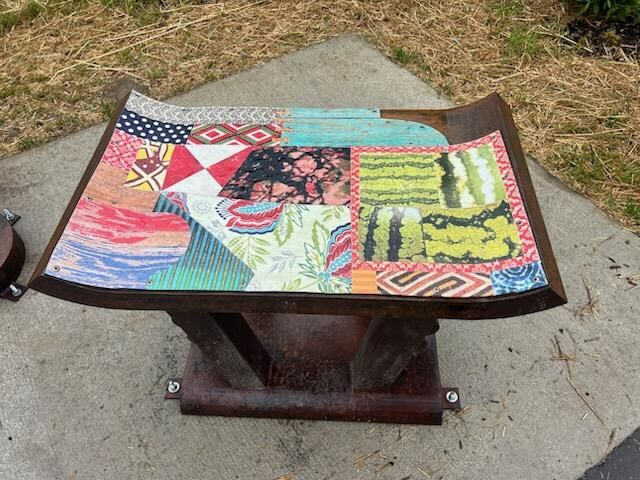
Fabricated steel, bricks, and glass bottles
Artist Website
Location
Western Branch: north of Guilford Avenue crossing
Made Possible By
Dawn S. Chaney Foundation
Collection
Part of the Neighborhood Benches Collection along with
- Western Branch: north of Guilford Avenue crossing
- Western Branch: between W. Market Street/W. McGee Street
- Southern Trace: Five Points, Freeman Mill Road ramp
- Western Branch: Morehead Park, Spring Garden Street and Edgeworth Street
- Southern Trace: Carolyn Coleman Way and Arlington Street
- Southern Trace: Bragg Street and Martin Luther King Jr Drive
- Eastern Way: Murrow Boulevard and East Market Street
- Northern Passage: Murrow Boulevard and Chestnut Street
- Northern Passage: LoFi Park, North Eugene Street and West Smith Street
Description
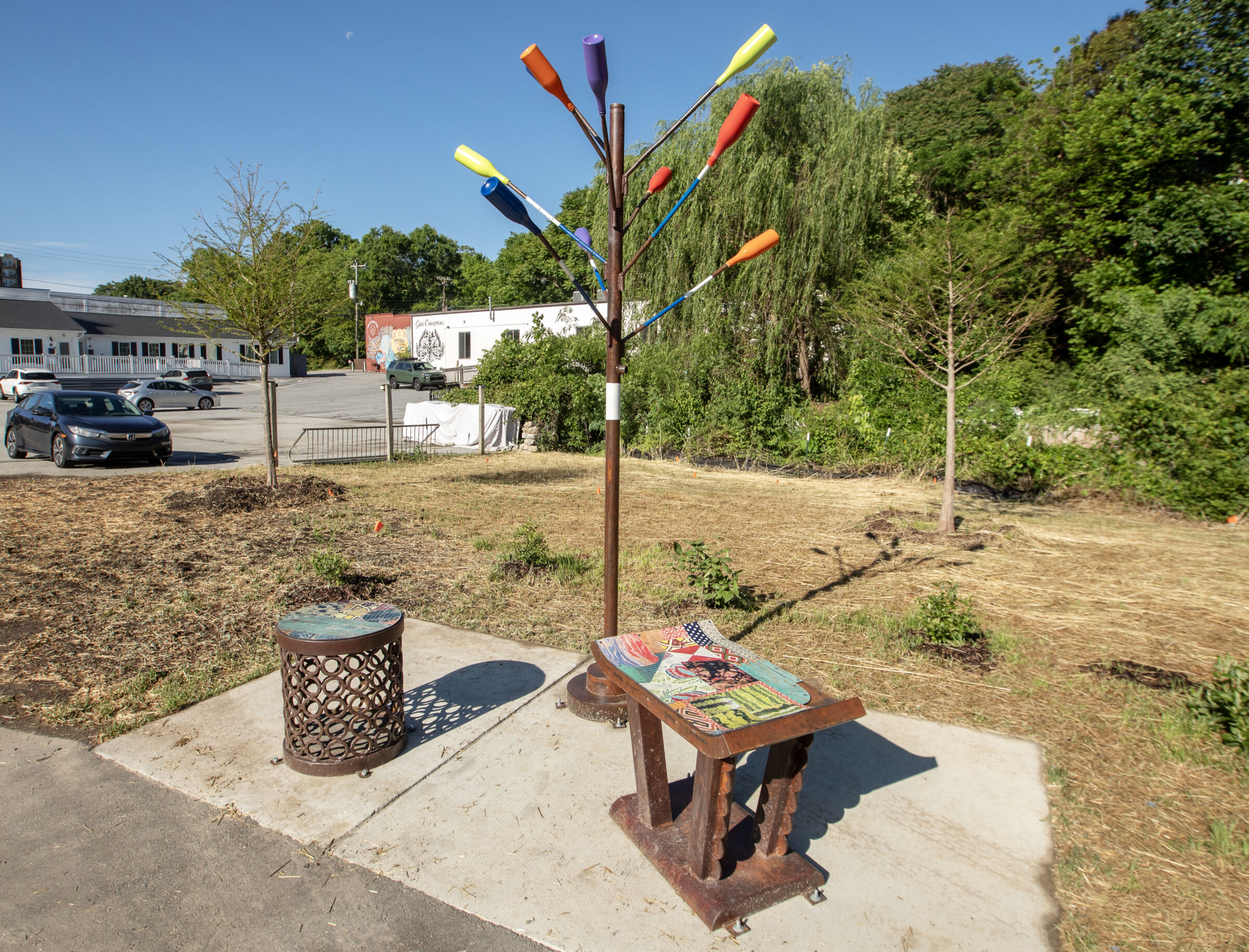
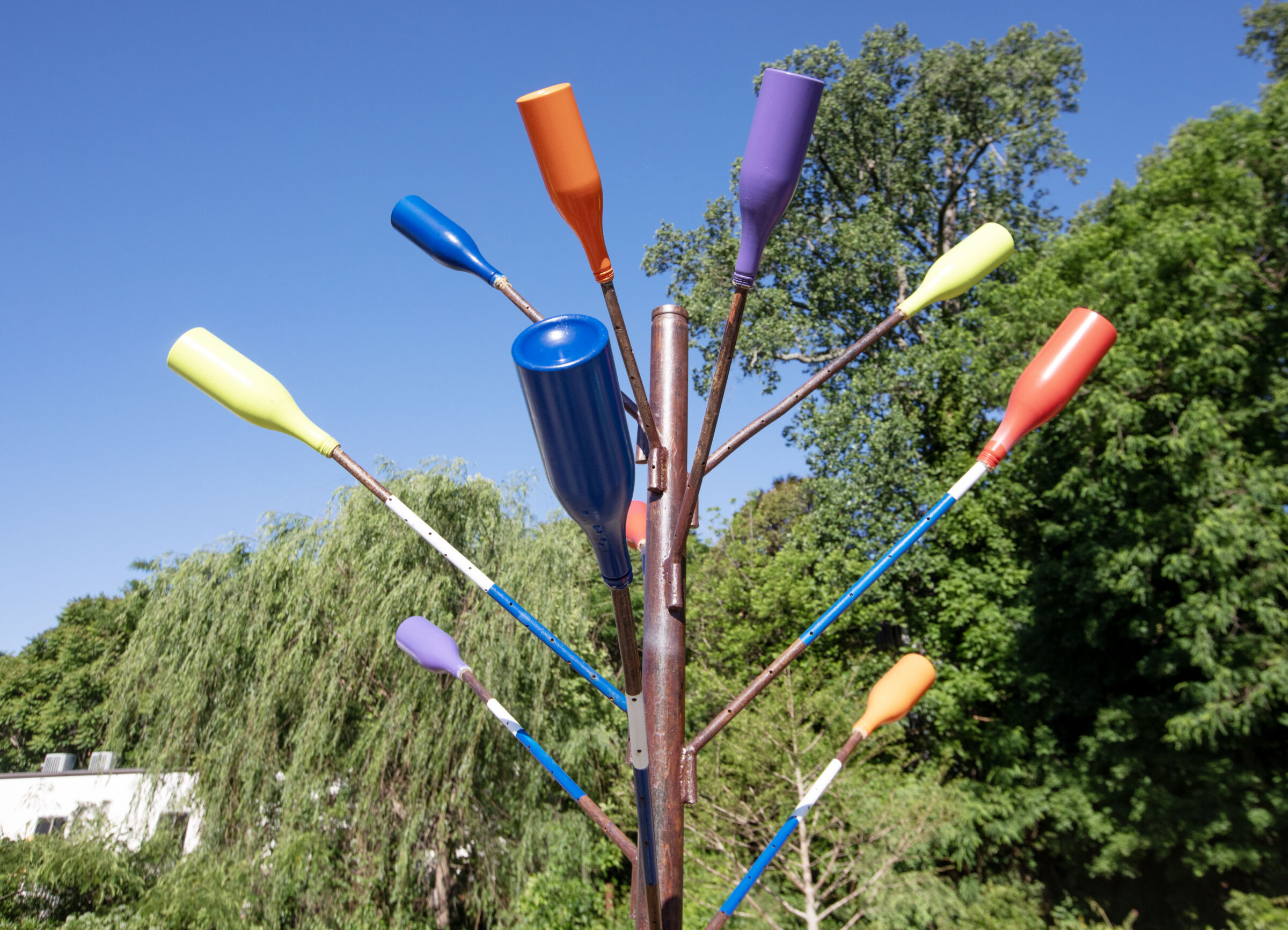
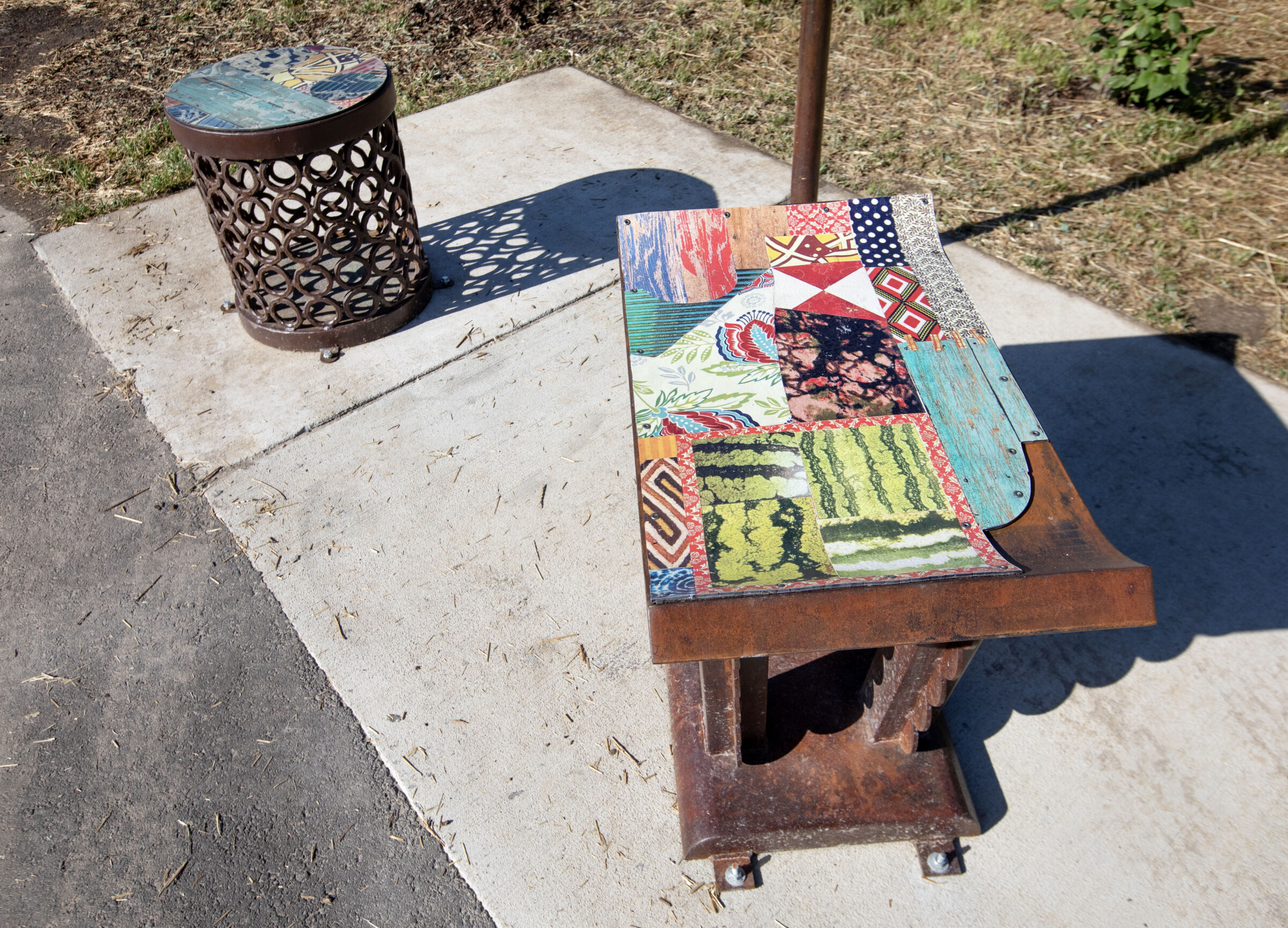
The design for this bench emerged from newly uncovered history, which revealed what is now the Westerwood neighborhood began in 1873 as a thriving African-American community. Originally anchored along Delphina Street – likely named for Quaker abolitionist Delphina Mendenhall – the neighborhood was gradually erased through racially restrictive development and private land acquisition. In 1898, Delphina Street was renamed Guilford Avenue, signaling a shift away from its abolitionist roots. Over the next century, displacement continued with the last descendant of the founding families selling their property in 1997. Delphina Station responds directly to this history. Inspired by the artist’s ancestral ties to two of the original Black landowning families, the work is conceived as a contemplative tribute space. Featuring steel stools and a symbolic bottle tree rooted in African and Southern tradition, the installation invites reflection, remembrance, and community dialogue – reclaiming a story long overlooked and restoring presence to Westerwood’s foundational past.
Audio Tour Available
Enjoy the Downtown Greenway Audio Tour with the Otocast app.